|
 |
Our
traffic ticket dismissal method is highly successful - 95%
Success Rate! |
 |
We
remove the majority of the stress and hassle normally
associated with fighting a traffic ticket. |
 |
Our
method for fighting traffic tickets is not anything like the
rest and it is so easy to do. |
 |
Our
legal documents do almost all of the work required to get your
traffic ticket dismissed. |
 |
Our
customers usually do not have to say a word in Traffic Court;
our documents speak for you. |
 |
No
vehicle code is used in our defense method. Saves you a lot of
time and aggravation! |
 |
You
do not cross examine the citing Officer on the witness stand.
A major stress reliever! |
 |
100%
Money Back Guarantee. Ticket Slayer makes it very hard to
lose! |
| |
 |
|
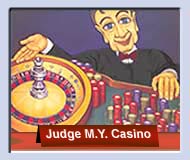
All traffic ticket defendants
please place you bets, Judge M.Y.
|
|
Casino now presiding! Fighting a
traffic ticket in traffic court
is |
|
tantamount to playing a rigged game
of Traffic Court Roulette |
|
with the judge. Our recent discovery of
some little known game |
|
rules allow our customers to now
win the game of Traffic Court
|
|
Roulette almost every time. Ticket
Slayer makes it possible for |
|
anyone to beat the system at it's
own
game! | |
| |
|
| |
Our process is very simple, so there are no long
protracted and/or complicated explanations for you |
| |
to read though. Ticket Slayer employs the power of
common law to get your traffic ticket dismissed. |
| |
Almost everyone has heard about common law, but few
really understand what it is and how powerful |
| |
it can be. For this reason, we will explain a little
about common law. We will also provide you with
the |
| |
necessary information on how our process
works to get your traffic ticket dismissed directly, but
first |
| |
it is important to lay down for you the
foundation supporting our common law process so you
can |
| |
understand why it
works. |
|
| |
Common law can be described as; law not
initially set down in writing, unlike statutes or
constitutions (which are derived from the legislative branch
of government). Common laws received their binding power and
the force of law, by long immemorial usage, and by their
universal reception. Common law predates written law. Much of
the foundation of common law is derived from biblical
teachings, like the Ten Commandments. Common law is the
underlying foundation of our Constitution and many of the
principles of law used by our judicial system today.
Who is common law intended for? The
answer is; flesh and blood people, or sovereigns. The purpose
for legislative law or administrative law, which includes
codes is to regulate the actions and behavior of artificial
entities, such as corporations, associations, organizations
and political & governmental bodies, not flesh and blood
people |
|
|
| |
WHAT IT MEANS TO BE A SOVEREIGN
As a sovereign you are not subject to any law besides
that of common law. We realize that this idea is totally
foreign to most of you, as we have been erroneously taught all
of our lives that we are subject to laws passed by the
legislature or those in the lesser bodies of government. We
would love to go into all of the underlying reasons as to how
and why we have been hoodwinked over a long period of time by
our corrupt politicians, corrupt courts and lawyers into
believing this lie, but that would take up a lot of space and
is not the primary reason for this web site. In the near
future we hope to add a link to this site providing people
with an in-depth background study of this subject. In the mean
time, We have included the following link to the1886 United
States Supreme Court decision of Yick Wo v. Hopkins 118
U.S. 356 totally upholding the fact that we are sovereigns in
our own right and not subject to legislative or administrative
law. This United States Supreme Court decission was handed
down before our legal system became nearly as corrupt as it is
today in America.
The case of Yick Wo v. Hopkins
takes place in the late 1800's and is about Yick Wo, an
immigrant Chinese laundry owner in San Francisco who was fined
and then jailed for failure to obey a local ordinance passed
by the San Francisco Board of Supervisors requiring all
laundry owners to relocate laundries housed in wooden
structures to brick or stone structures or to close down their
businesses. The case is most often cited as a civil rights
case because the all white San Francisco Board of Supervisors
and Sheriff Hopkins selectively enforced the newly passed
ordinance along racial lines. The
white laundry owned laundries were mostly housed in brick or
stone structures and the few white owned laundries located in
wooden structures were all given a free pass, while not of one
of the immigrant Chinese laundry owners were exempted from the
ordinance. Most of the immigrant Chinese laundry owners were
poor and could not afford to relocate their laundries to brick
or stone structures. The Chinese laundry owners, like Yick Wo
who continued to operate their laundries located in wooden
structures in defiance of the order were fined and then jailed
when they didn't pay their fines.
On August 24, 1885, Yick Wo petitioned the supreme
court of California for the writ of habeas corpus, claiming he
was illegally deprived of his personal liberty by the
defendant Sherrif Hopkins, the sheriff of San Francisco
County.
Justice
Matthews
states in the U. S. Supreme Court decision in favor of Yick
Wo: "Sovereignty itself is, of course,
not subject to law, for it is the author and source of law;
but in our system, while sovereign powers are delegated to the
agencies of government, sovereignty itself remains with the
people, by whom and for whom all government exists and
acts."
Justice Matthews makes a very profound statement in the
case of Yick Wo v. Hopkins; clearly stating that we (you and
I) are 'sovereigns,' not
subject to law. Justice Matthews did not just dream up the
concept that we are sovereigns and as a sovereign we are not
subject to law. Of course not, he had very sound bases for his
profound proclamation, which was based upon his knowledge and
belief that God created man and decreed man to be a sovereign.
Justice Matthews also based his opinion upon the knowledge and
belief that our nation's founding fathers strongly held this
same belief and incorporated it into the fabric of our
constitution.
Justice Matthews reminds us; while, yes it is true that
our government has sovereignty delegated to it by the people,
the people are the creators of the government and of the
administrative law and we the creators or sovereigns are not
subject to the law as its creators.
Remember and teach your children well that you and they
are the true sovereigns. Your place is above government and
never beneath the feet of government. God is the Sovereign
Creator of our universe, we serve God and never does God serve
His creation; man. Man is the sovereign of his domain and
created government to serve him within his domain. An axiom of
truth decrees that; the creator never serves his creation. Ask
yourself who is severing whom today? How did it get to this
point? The true responsibility and blame lies with us and all
Americans who preceded us following the Civil War.
Will you be the master or will you continue to be the
slave? The choice of slave has already been made for you and
your children unless you have the will and courage to change
it. |
|
|
| |
THE COMMON LAW TRAFFIC TICKET DEFAULT
PROCESS
The Ticket Slayer common law traffic default method
consists of six legal documents. The six documents are filed
in five steps with the prosecutor's Office and the Traffic
Court Clerk as outlined in our easy to follow instructions.
You will need approximately 15 to 20 days before the date of
your trial to complete the filing process. If you have less
than this amount of time before your trial date, then in most
cases you can simply call the traffic court clerk and ask for
a postponement of your trial. Generally, the court clerk is
authorized by the court to allow you a one time postponement
of your trial. The court clerk can usually grant a
postponement of up to 30 days, and in some cases he is
authorized to grant even more time.

STEP ONE:
The default process is begun by serving your Affidavit
of Truth upon the prosecutor, and filing a copy with
the court clerk. The Affidavit of Truth is your sworn
statement of facts, which include facts such as; you deny that
you are the corporate person (under law a corporation is a
corporate person) whose name appears in ALL CAPS upon your
traffic ticket, or on court records, you have no contract with
the county or the state, you say you are a sovereign, a
creation of God, and are not subject to administrative law
(referencing Yick Wo v. Hopkins). The prosecutor by law has X
amount of time to rebut your claims made in your Affidavit of
Truth or he is in default. Hundreds of people have used our
default method across America, and only two prosecutors have
ever attempted to counter the Affidavit of Truth. However,
both prosecutors only made some general vague allegations
about how they felt the Affidavit of Truth was somehow not
valid, but they failed to attempt to rebut even one of its
claims.
STEP TWO:
After time has expired for the prosecutor to rebut your
Affidavit of Truth, then you will file a "Notice of
Default and Three Day Notice to Cure" (this is one
document), this notice advises the prosecutor that a default
now exists, and he has three days notice to cure the default.
Meaning; the prosecutor has three days to drop the case
against, or you will file a Final Notice of Default legally
establishing a default against him.
STEP THREE:
When the prosecutor fails to cure the default you file a
Final Notice of Default. The Final Notice of
Default finalizes the default under the common law, and under
the common law principle of "bars and
latches" the prosecutor can not legally proceed
to prosecute you in this case.
STEP FOUR:
After filing the Final Notice of Default, you will file your
Motions to Dismiss and a Writ of
Praecipe together at the same time. The Motions to
Dismiss are legal reasons why the court should dismiss your
case. Mostly, the reason we provide you with the Motions to
Dismiss, is to provide the judge with a list of excuses he can
use to dismiss your case. No judge is likely to ever admit his
reason for dismissing your case is because, you left him no
choice when you placed the prosecutor in legal default.
Instead, the judge will find some other excuse to dismiss your
case. However, don't be surprised if the judge does not use a
one of the reasons listed in your Motions to Dismiss to
dismiss your case.
In normal
circumstances, only about 10 to 15 percent of traffic cases
get dismissed in traffic court because the citing officer was
not available to appear in court. It does strike us a just bit
odd however, 90 percent of the time our customers have the
judge dismiss their case because, the citing officer was
unavailable to be in court to testify against them. Very
curious, very curious indeed. We do have a name for this
curious phenomenon; we call it the "Ticket Slayer
officer-flu pandemic." It only strikes traffic
officers just before they are scheduled to appear in court as
a witness against a Ticket Slayer customer using our common
law default method. We might be wrong about this.... it could
be that judges are really just informing traffic officers not
to come to court in cases where the officer has cited a Ticket
Slayer customer using our common law traffic default, but that
wouldn't be kosher now would it?
If the
judge waits to the last minute before trial to read your
default documents, he may not have time to inform the officer
that, the officer has the flu, that is.... the officer
shouldn't show up for trial to testify against you. In this
case the judge has to quickly come up with a quick excuse to
dismiss your case, without admitting the default is his real
reason for dismissal. Judges are often a crafty bunch and they
keep an ace shoved up their sleeves for just for such
emergencies. In this case the ace up their sleeve is the old,
- "I am dismissing this case in the interest of justice"
excuse. This ace or magic phrase is used by judges to conceal
the real reason why they are being forced to dismiss a
case.
In step
five, you will also file the Writ of Praecipe. A "writ" is an
order. The Writ of Praecipe respectfully orders your servant,
the traffic court clerk, to enter the default against the
prosecutor and to notice all parties of interest. You give the
court clerk three days time to carry out your
demand.
STEP FIVE:
When the court clerk fails to do his ministerial duty by
recording the default and sealing it with the court seal, and
by noticing the parties of interest, then you will be forced
to file a Writ of Mandamus. Mandamus means
"we command." Writs are used by higher courts to command a
lower court do its ministerial duty, or by courts in general
to command a person holding government office do their
ministerial duty. In this case we present the Writ of Mandamus
to the court, and respectfully ask the court to use our writ
to command the Clerk of the Court, a person holding government
office, to do his ministerial duty and enter the default.

The
prosecutor defaults when he fails to rebut your sworn
statement of facts, which attests to the fact that you are a
sovereign; not subject to laws derived by governmental bodies.
This fact is supported biblically, by common law and by the
United States Supreme Court in the case of Yick Wo v. Hopkins.
Together, these three foundations in support of your claims
effectively create a legal claim so strong it becomes an
almost certain legal impossibility for the prosecutor to rebut
your claims.
When you
arrive in traffic court for your trial, the traffic court
judge should have already received and read a copy of all of
your documents. The judge seeing that the prosecutor has
defaulted, has no choice legally, but to dismiss your case as
the prosecutor by law lost all right to prosecute you when he
defaulted. Now, we know approximately 5% of the judges will
violate their ministerial duty and their judicial oath of
office by refusing to dismiss your case. Judges, even though
some may not think so, are not above the law, and a judge who
refuses to dismiss a case where the prosecutor has defaulted
upon his right to prosecute, can be sued for violating their
ministerial duty and judicial oath of office. |
|

|
TRAFFIC
COURT | TESTIMONIALS
| FAQ's
| GUARANTEE
/ POLICIES | ORDER
| CONTACT
US Ticket Slayer has a 95%
Success Rate Getting Traffic Tickets Dismissed. Our customers
rarely have to say anything in Court. There are no vehicle
codes to research. Our money back guaranteed, common law legal
process does all the work to get your traffic ticket
dismissed. traffic, ticket, slayer, driver, license, speeding,
stop, red, light, camera, vehicle, court, moving violation,
seatbelt, fighting traffic ticket, beating traffic ticket,
traffic ticket dismissal, how to beat a traffic ticket,
traffic ticket, traffic ticket defense traffic ticket license traffic ticket slayer ticket slayer speeding stop red light camera vehicle court moving violation seatbelt fighting traffic ticket beating trafffic ticket traffic ticket dismissal traffic ticket defense
| |
 | |